
Tophy - Match,Chat,Dating
LongdistanceSocial
2.0245.00 Reviews
- Version
- 3.48.2
- Installs
- 100.00K
- Age Rating
- Mature 17+
Screenshots
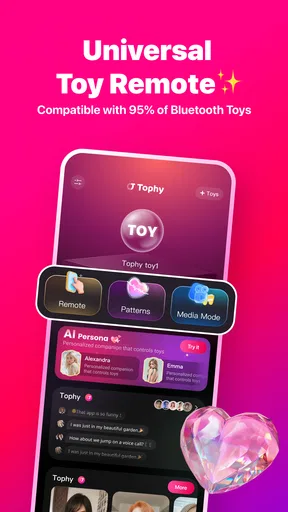

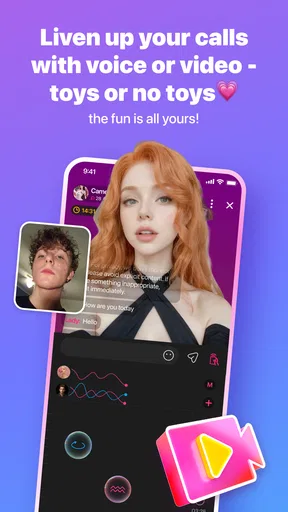
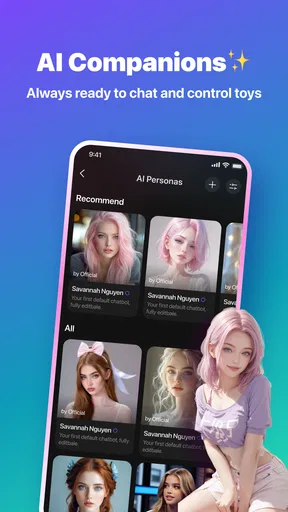
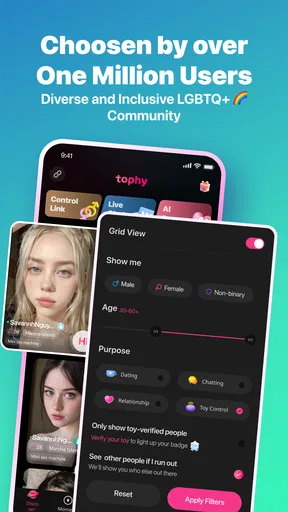
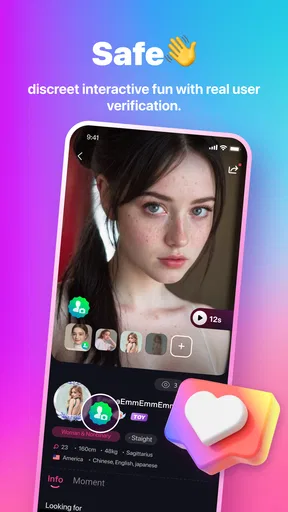
Our Review of Tophy - Match,Chat,Dating
 Analysis by Appyee
At first glance, Tophy feels like a social app built around more than ordinary messaging. Its store summary points to toy control, matching, chat, and dating, so the appeal is easy to understand: it tries to combine conversation, flirtation, and a more playful form of remote interaction in one place. I approached it less as a novelty and more as something I might keep on my phone for several months. That distinction matters, because a dating app can be exciting during its first few sessions and still become tiring once the initial curiosity disappears.
My first impression was that Tophy is aimed at adults who want dating to feel more interactive than a sequence of profile swipes and short messages. The mature age rating is important here. This is not an app I would suggest casually to teenagers, and I would treat every conversation as an adult social interaction that deserves normal online-safety habits. The app is free to install, while optional purchases range from small amounts to considerably larger individual items, so I would decide in advance how much I am comfortable spending rather than making decisions in the middle of an emotional conversation.
From first-week curiosity to a usable routine
I’d use the move from first-week curiosity to a routine as a practical test: does the app make it easier to share a comfortable moment, or does it simply add another inbox to check? I would agree on a low-pressure time to use it and keep the activity optional, so neither person feels obliged to respond immediately. That everyday rhythm also makes it easier to notice whether the interface works for both people in different situations.
Why the opening experience can be appealing
The strongest part of Tophy is the way its different ideas reinforce one another. Matching gives you a reason to meet people, chat provides the basic relationship-building layer, and the toy-control angle gives conversations a more distinctive purpose than the usual “hello, how was your day?” exchange. That combination may be especially attractive to users who find conventional dating platforms too repetitive or too focused on polished profiles.
I can imagine the first week feeling active because there are several kinds of engagement available. Someone may begin by browsing for a match, move into conversation, and then decide whether the more playful controls fit the relationship. That progression is more interesting than an app where every interaction starts and ends with text. Still, I would not confuse variety with depth. The app can create a memorable opening, but the quality of the experience will depend heavily on whether you meet people who are actually interested in sustained conversation rather than a quick novelty.
A realistic everyday use case would be a person who has a quiet evening after work and wants to meet someone without committing to an immediate in-person date. They could use the matching side to find a potential connection, chat at their own pace, and decide together whether the toy-related part belongs in the interaction. For a long-distance couple, the same idea may offer a way to add a shared activity to an otherwise ordinary call or message exchange. The important word is “together”: I would only use that aspect when both people have clearly agreed on it.
How I would approach matching and chat
I would treat the matching feature as an introduction tool, not as proof of compatibility. A match can open a door, but it cannot tell me whether the other person is respectful, consistent, or genuinely interested. The best approach is to move slowly from a first message into ordinary conversation before sharing personal details or spending money. That is particularly sensible in an app where dating and intimate interaction sit close together.
Chat is likely to be the part that determines whether Tophy survives beyond the first week. The unusual feature may attract attention, but regular users return because conversations feel comfortable and worthwhile. I would look for signs of reciprocity: does the other person ask questions, remember what I said, and respect a boundary when I set one? If not, no amount of extra functionality can turn the interaction into a good relationship.
One practical tip is to separate curiosity from commitment. I would first learn how matching and messaging feel, then discuss the toy-control element openly instead of assuming that a match automatically means consent to every feature. That small pause prevents an awkward misunderstanding and makes the app more usable for people with different comfort levels. It also helps identify users who are interested in the person rather than only the novelty.
The hidden trade-off of a free starting point
Because the app is free, trying it does not require an upfront purchase. That makes experimentation straightforward, especially for someone unsure whether this style of social dating is suitable. However, the presence of in-app purchases changes the decision once the app becomes emotionally engaging. A low-cost item can feel harmless in isolation, while repeated purchases can become a regular part of using the service.
I would recommend setting a spending boundary before using the paid elements. That is not a criticism unique to Tophy; it is simply more important here because dating, attention, and intimate interaction can make optional spending feel personal. If an interaction starts to feel as though affection depends on buying something, I would step back. A healthy connection should not require me to keep paying to maintain basic respect or conversation.
Who is most likely to enjoy it
Tophy makes the most sense for adults who are comfortable with a dating environment that includes playful remote interaction and who want an alternative to standard swipe-and-message apps. It may also suit established couples who are looking for a shared digital activity during time apart. In both cases, the user needs to be comfortable communicating boundaries clearly.
I would be more cautious recommending it to someone seeking a purely traditional dating service, a large general-purpose social network, or a simple private messaging tool. If your priority is finding local people through detailed search filters, building a broad public community, or keeping every conversation non-intimate, a conventional alternative may fit better. Tophy’s identity is narrower, and that focus is both its main attraction and its main limitation.
What changes after the novelty fades
The first-week question is whether the unusual concept is entertaining. The month-to-month question is whether it remains useful after I already understand how it works. For Tophy, recurring value will probably come from a small number of meaningful connections rather than endless discovery. If I find someone compatible, the app can become a convenient shared space. If I do not, repeated matching may start to feel like repeating the same introduction with different faces.
This is where Tophy differs from a broad dating app. A larger mainstream service may offer more variety in how people meet, while Tophy offers a more specific kind of interaction. Specificity can create stronger engagement for the right audience, but it also reduces the chance that every user will find a lasting reason to return. I would judge it by the quality of my conversations, not by how many profiles I can browse.
Keeping a connection active over time
For a couple, the app could have recurring value if it becomes part of a planned routine rather than an activity used only when one person is bored. A weekly check-in, a playful conversation after a long day, or a shared moment during travel could give the app a clear place in the relationship. The key is to use it as one ingredient in communication, not as a replacement for talking honestly about feelings and expectations.
For people dating through the app, I would use a simple progression: start with ordinary chat, establish mutual comfort, discuss what each person wants, and only then explore the more distinctive controls. This workflow is more sustainable than leading every conversation with the most attention-grabbing feature. It also makes it easier to notice whether there is real compatibility underneath the novelty.
Another non-obvious trade-off is that the app’s strongest feature may also narrow the audience. A person who enjoys intimate remote interaction may find ordinary dating apps dull by comparison, but someone who dislikes that format may leave quickly even if the matching and chat experience is otherwise acceptable. That means long-term retention depends less on universal appeal and more on finding the right kind of user.
Maintenance: what I would have to manage
Using Tophy responsibly requires more maintenance than simply checking messages. I would need to manage privacy, emotional boundaries, spending, and the pace at which a new connection becomes intimate. Those tasks are not visible in a short store summary, but they shape whether the app feels comfortable over time.
Privacy deserves particular attention whenever dating and intimate interaction overlap. I would avoid sharing identifying information too early, keep conversations inside the app until trust has developed, and never assume that a friendly tone proves someone is safe. I would also be careful with images, recordings, and any personal details that could be copied or shared outside the original conversation. The safest experience is one where both people understand what is private and what is not.
Consent should be an ongoing conversation, not a one-time assumption. A match does not automatically authorize toy control, sexual discussion, or requests for personal media. I would ask directly, accept a no without pressure, and expect the same courtesy in return. If someone rushes me, treats hesitation as rejection, or connects attention to purchases, I would end the interaction rather than trying to repair it.
Where the recurring friction appears
The first source of fatigue is repetition. Matching services can make every new conversation feel like work, particularly when many chats never develop beyond a greeting. Tophy’s distinctive concept may make the first exchange more memorable, but it cannot guarantee that people will be thoughtful, available, or compatible. After several weeks, I would want fewer empty conversations and more dependable connections.
The second source is emotional ambiguity. When dating, chat, and remote toy interaction appear in the same environment, it may be difficult to tell whether someone wants a relationship, casual conversation, or only a transactional experience. I would ask early questions about expectations instead of trying to interpret every message. That saves time and reduces the chance of becoming invested in an interaction that was never offering what I wanted.
The third is financial pressure. Optional purchases can be easy to overlook during a first session, yet they become more significant when repeated across multiple conversations. I would review my own spending regularly and avoid using purchases as a way to gain attention or keep someone interested. If the free experience does not feel worthwhile without buying extras, that is a strong sign that the app may not deserve a permanent place on my phone.
A fourth issue is social energy. An app that combines matching and intimate interaction can demand more attention than an ordinary messaging service. I would not keep notifications active all day, and I would schedule times to check messages instead of allowing every new match to interrupt work, sleep, or existing relationships. Turning the app into a constant obligation would remove much of its enjoyment.
Version, reach, and what they mean in practice
Tophy is maintained by Longdistance, and the current version is 3.48.2. It supports Android 7.0 and later, which makes it accessible to people using older Android devices. That broad compatibility is useful, although I would still keep the operating system and the app updated whenever possible, especially for a service involving private conversations.
The app has passed the early experimental stage: it was released on October 25, 2022, and has more than one hundred thousand installs. Its average rating is 2.0 from roughly one thousand six hundred ratings, with around two hundred forty-five written reviews. I would read that combination as a reason to test it carefully rather than assume either universal success or automatic failure. A low average rating can reflect real friction, but individual experiences may vary depending on location, expectations, and whether the user wants the app’s specific style of interaction.
The mature rating also changes how I would recommend it to others. I would not install it on a shared family device without considering who can access notifications, and I would not treat it as a harmless general social app. Adults should be comfortable with the subject matter before creating an account, and anyone who feels pressured by another user should stop engaging and use the app’s available safety controls.
When another option is better
If my goal were a broad pool of potential partners, I would probably begin with a mainstream dating app. Those services are usually a better match for people who want conventional profiles, familiar messaging, and a relationship search that does not center on toy control. If my goal were simply staying in touch with a partner, a standard private messenger or video-call service might be less distracting and easier to fit into everyday life.
Tophy becomes more persuasive when the specific combination matters. Someone who wants matching, chat, and a playful long-distance element in one adult-focused environment may find it more relevant than a general platform. The trade-off is that I would accept a narrower audience and spend more time deciding whether a conversation is genuinely compatible with my boundaries and expectations.
My long-term verdict
Tophy earns lasting space only when it supports a real connection. I would not keep it installed merely because the concept is unusual. Novelty is enough for a trial, but not enough for a habit. After the first week, I would ask whether I am having better conversations, maintaining a meaningful long-distance relationship, or enjoying a mutually agreed activity with someone I trust. If the answer is no, the app becomes another source of notifications and unfinished chats.
My recommendation is therefore selective. Adults who are curious about a dating app with toy control and who are willing to manage consent, privacy, and spending may find a distinctive experience here. I would start slowly, keep purchases under control, and let trust develop before using the more intimate side of the service. People looking for a conventional dating catalog, a general social network, or a no-cost messaging tool should choose something more focused on those needs.
In my view, Tophy’s future value depends on maintenance more than excitement. The app has a clear identity, but that identity will not suit everyone. If it helps two people communicate when distance makes ordinary dating difficult, it can become a useful part of their routine. If it produces only a burst of curiosity followed by repetitive matching, unclear expectations, and spending pressure, uninstalling it is the sensible long-term choice.
Verdict
Strengths of Tophy - Match,Chat,Dating
- Simple interface makes browsing profiles quick and convenient.
- Multiple ways to connect encourage conversations beyond basic matching.
- Profile discovery can help users meet people with similar interests.
- Useful for casual dating, friendship, or exploring new connections.
- Available on mobile for convenient messaging wherever you are.
Limitations of Tophy - Match,Chat,Dating
- Some features may require a paid subscription or in-app purchases.
- The quality of matches depends heavily on the number of active users nearby.
- New users may encounter incomplete or poorly detailed profiles.
- Online dating always carries risks from fake accounts or misleading information.
- Frequent notifications can become distracting without careful settings management.
Similar Picks in This Category
View All
Meta Platforms, Inc.4.6

Instagram4.0

Likee-Live, Chat & Party Games
Likeme Pte. Ltd.4.4

Facebook Lite
Meta Platforms, Inc.4.5

TikTok - Videos, Shop & LIVE
TikTok Pte. Ltd.4.0

Moj: Free Short Drama & Reels
ShareChat4.1
Frequently Asked Questions
What is Tophy – Match, Chat, Dating, and how does it work?
Tophy – Match, Chat, Dating is a social dating app designed to help people discover potential matches, start conversations, and build new connections. After creating a profile, users can typically browse other members, review photos and personal information, and express interest. If the interest is mutual, the app may allow both users to chat. The available features can vary depending on location, account type, and app version.
Is Tophy suitable for finding serious relationships or casual conversations?
Tophy may be useful for different dating goals, including meeting new people, casual conversations, friendship, and potentially developing a serious relationship. However, the quality of matches depends largely on the number of active users in your area and how completely you build your profile. Before downloading, consider clearly stating your intentions and reading other users’ profiles carefully so expectations are more likely to match.
Does Tophy require payment, and are there optional in-app purchases?
The app may offer basic dating functions at no cost while reserving certain features for premium users. Depending on the current version, paid options could include enhanced visibility, additional matching tools, unlimited messaging, or other profile-related benefits. Pricing and subscriptions can change, so review the official store listing and the in-app payment screen before confirming any purchase. Also check renewal terms if a subscription is offered.
How can users stay safe while using Tophy?
As with any dating platform, users should protect their personal information and communicate carefully. Avoid sharing your home address, financial details, passwords, or sensitive documents, and be cautious if someone quickly asks for money or pressures you to move the conversation elsewhere. Use the app’s blocking and reporting tools when necessary. For an in-person meeting, choose a public location, tell someone you trust, and arrange your own transportation.
What should I know about privacy, profiles, and account management before downloading Tophy?
Before joining Tophy, review the app’s privacy policy and permissions to understand how profile information, photos, messages, and device data may be handled. Use accurate information without revealing details that could compromise your safety, and choose photos you are comfortable sharing with other members. It is also worth checking whether the app provides profile visibility controls, reporting options, data deletion, and a straightforward way to cancel subscriptions or close your account.
